Quick Take
- Funding for GameFi projects plunged 70%, leading to dozens of shutdowns and stalled developments.
- Major game tokens lost over 90% of their value, exposing flaws in speculative economies.
- A handful of NFT games, like Axie Infinity, held steady with loyal players and adapted mechanics.
The year 2025 hit crypto games hard. What started with promise between new consoles, blockchain partnerships, and fresh titles ended in a wave of closures. Developers scrambled as investors pulled back, leaving projects exposed. The play-to-earn dream, once a beacon for Web3 gaming, turned into a cautionary tale. Tokens that fueled these ecosystems lost their shine, and user numbers dwindled. Yet amid the wreckage, some games pushed through, hinting at a more grounded future.
The Funding Drought That Dried Up Dreams
Money flowed unevenly through the year. Early quarters saw peaks, like over $147 million in the first, but by the end, funding had crashed by 70 percent. This wasn’t just a dip; it was a full retreat. Venture capital fled the sector, down to $350 million from a billion the year before. Projects that relied on hype couldn’t sustain themselves. User retention fell off a cliff. 60 percent gone within a month making it tough to justify costs.
Take the broader market. Crypto as a whole saw ups and downs, with Bitcoin hovering under $90,000 by late December. But for games, the pain was sharper. Tokens like RON dropped 92 percent, PIXEL 95 percent, and even the better ones, like WEMIX, slid 53 percent. The model built on earning through play crumbled when real demand for those tokens evaporated.
Shutdowns That Shook the Sector
The casualties piled up. Bright Star Studios pulled the plug on Ember Sword in May, blaming a lack of funds after a rocky beta. Nyan Heroes, a Solana-based shooter with big wishlist numbers, folded the same month, its NYAN token worthless after a 99 percent drop. By summer, more followed: Mojo Melee shifted to AI projects, and Pirate Nation shut down to chase smaller games, citing high costs for few users.
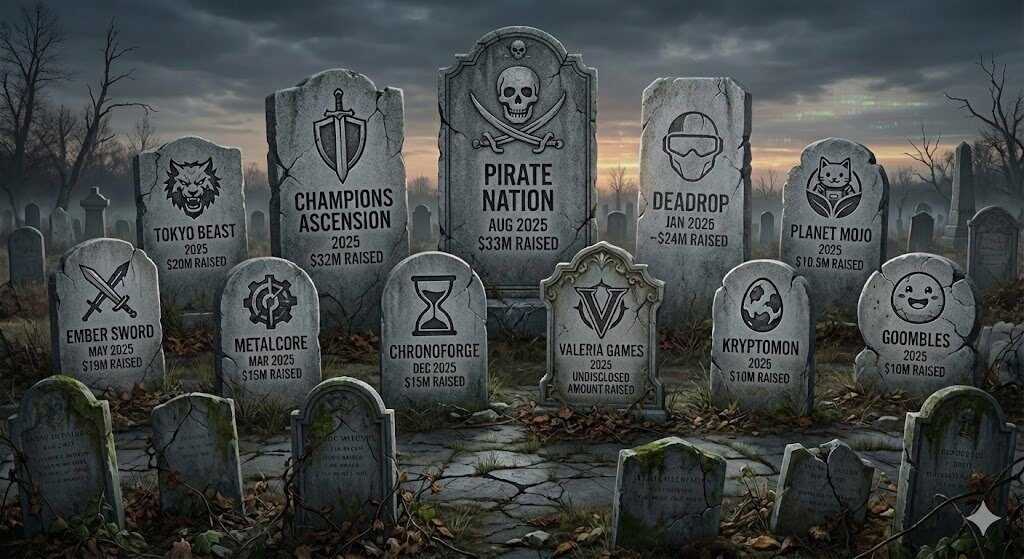
Even established names weren’t safe. Ragnarok: Monster World ended service by year’s close, angering fans who saw it as a stain on the classic IP. DappRadar, a key analytics tool for the space, closed after seven years of financial strain. These weren’t isolated and they signaled a historic collapse, with studios like Midnight Society giving staff just days’ notice before axing Deadrop. Players turned to refunds and chargebacks, their NFTs suddenly junk.
Survivors in the Storm: Top NFT Games Holding Ground
Not everything crumbled. Some NFT games adapted, focusing on core play over quick cash. Axie Infinity, the Southeast Asian staple, kept its turn-based battles alive, rewarding players with SLP and AXS tokens despite tougher competition. Alien Worlds let users mine and govern across planets, earning TLM in a somewhat balanced economy.
Others like Gods Unchained offered tactical card duels with GODS tokens for wins, drawing in strategic minds. The Sandbox thrived as a creator hub, where SAND fueled building and trading in a metaverse owned by users. Splinterlands rounded out the list with its auto-battler cards and DEC rewards, proving low-barrier entry could still work.
Shifting Gears: Toward Stablecoins and Real Value
The failures sparked change. Tokens tied to hype failed, so eyes turned to stablecoins for steadier payments. Mythical Games planned a USDC marketplace for 2026, ditching volatile assets. Casual “degen” games aimed at crypto natives emerged, while big ecosystems like MapleStory eyed blockchain tweaks.
Bright spots appeared too. FIFA Rivals dove in with a blockchain game on Avalanche, pulling in brands like Adidas. Play Solana launched a handheld console with a crypto wallet, blending hardware and tokens.
In the end, 2025 stripped away illusions. Crypto games learned the hard way: Build for players, not just profits. The road ahead demands smarter designs, but for those who adapt, opportunity waits.